
- home
- About us
- product
- news
- download
- contact us

2026/09/28
Wrought iron has been part of architectural design for centuries, and its appeal has not disappeared. From elegant gates and balconies to stair railings, window grilles, fences, and decorative details, ironwork can add both function and visual character to a building.
But why do architects, designers, builders, and homeowners continue to choose wrought iron?
The answer is not simply about appearance. Durability, design flexibility, customization, functionality, and timeless style all play an important role.
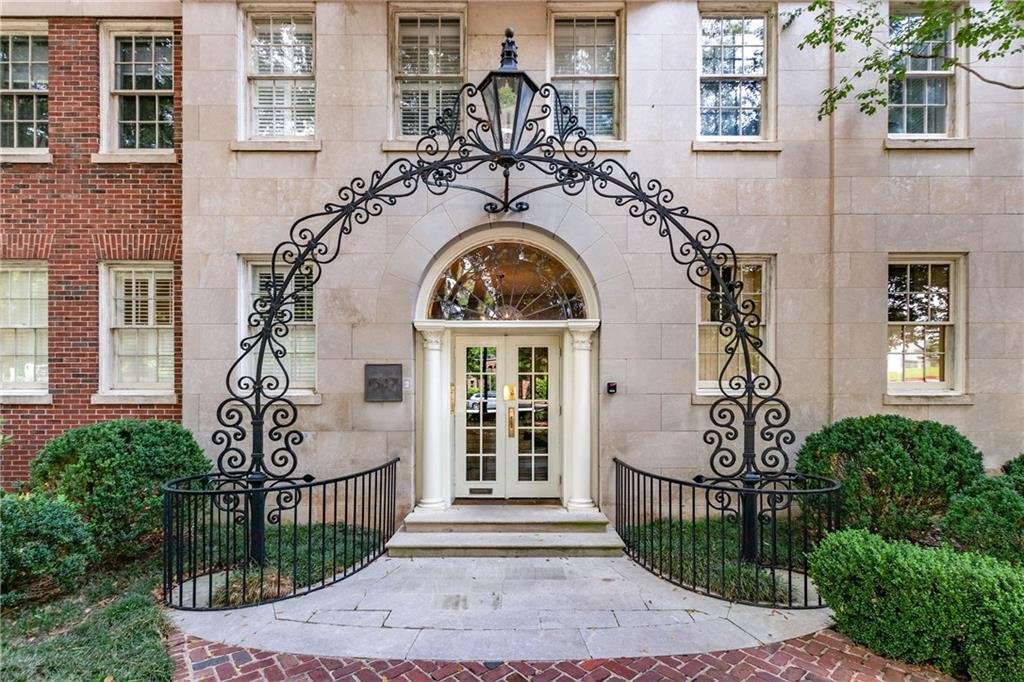
One of the biggest reasons wrought iron remains popular is its ability to become part of a building's visual identity.
Unlike many mass-produced materials, ironwork can be shaped into curves, scrolls, geometric patterns, leaves, flowers, and other decorative elements. Historically, wrought iron was heated until workable and then forged into desired shapes, making it particularly suitable for ornamental work.
A simple metal structure can therefore become much more than a functional component.
For example, a custom iron gate can create a strong entrance statement, while an ornamental balcony can add character to an otherwise simple facade.
This is especially valuable for:
· Luxury residential buildings
· Villas and private houses
· Hotels and resorts
· Commercial buildings
· Restaurants and cafés
· Historic-style architecture
· Garden and landscape projects

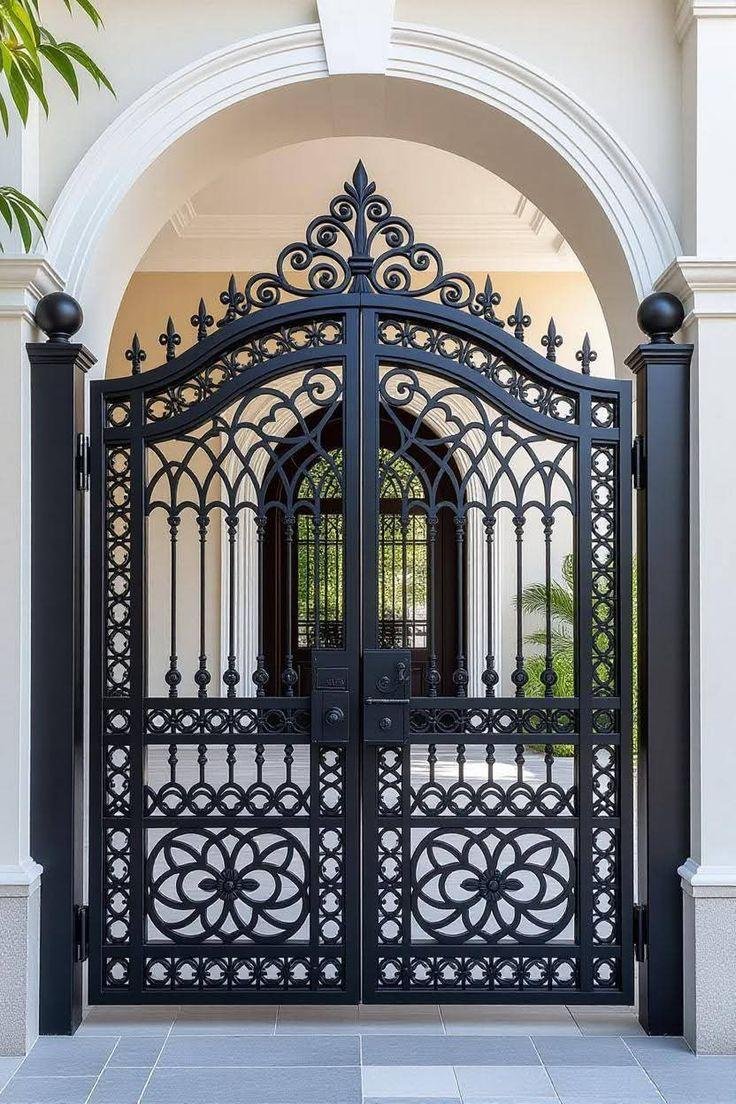
Architecture rarely follows a single style.
A modern building may require clean geometric lines, while a traditional villa may need elegant curves and decorative scrolls.
Wrought iron can accommodate both.
· Scrolls
· Curved lines
· Geometric patterns
· Floral motifs
· Leaves and vines
· Decorative circles
· Twisted bars
· Custom logos
· Traditional ornamental patterns
This flexibility makes ironwork particularly useful for custom architectural projects.
For a manufacturer, this also means that products can often be developed from drawings, sketches, dimensions, samples, or customer designs rather than being limited to standard models.
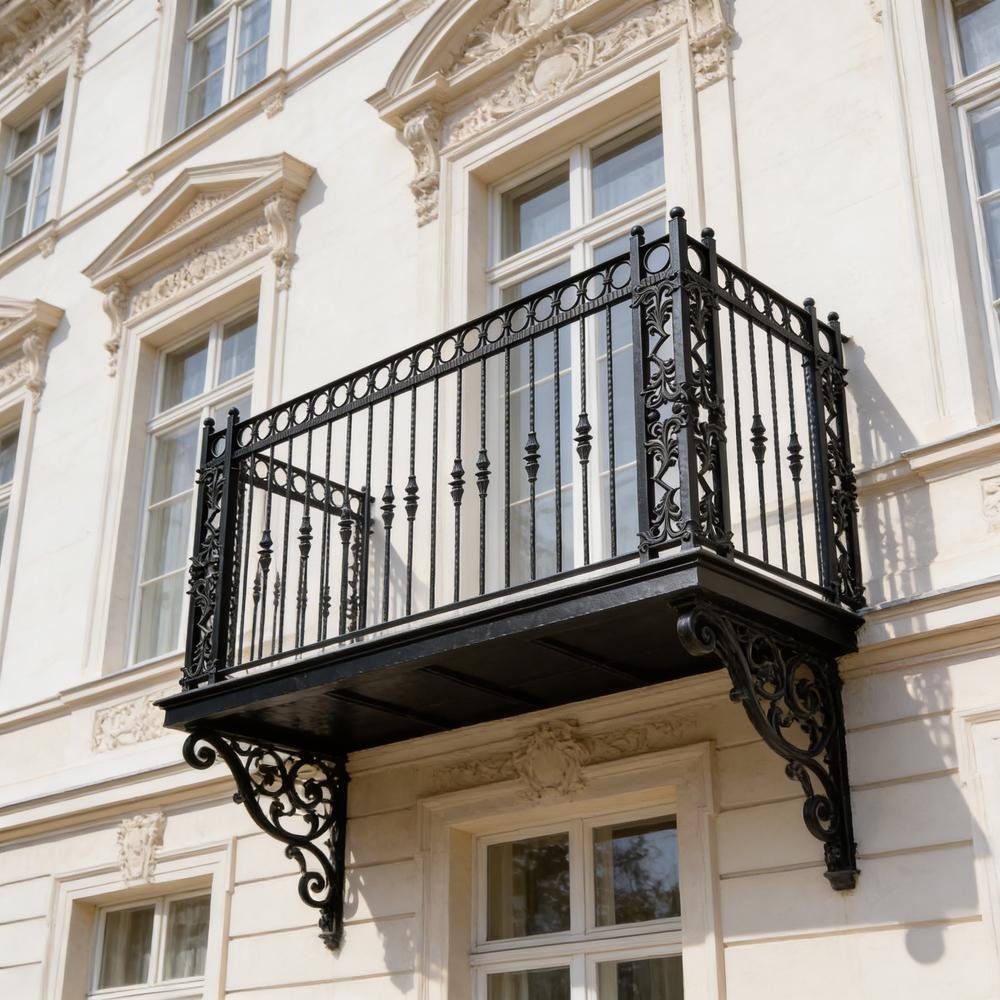
Another important advantage is that architectural ironwork does not have to be purely decorative.
A well-designed iron product can perform a practical function while improving the appearance of the building.
For example:
Application | Main Function | Design Value |
Iron Gates | Security & access control | Creates an impressive entrance |
Railings | Safety & support | Adds architectural detail |
Balconies | Safety & outdoor space | Enhances the facade |
Fences | Boundary & security | Defines the property's style |
Stair Railings | Safety & guidance | Becomes an interior feature |
Window Grilles | Security | Adds decorative character |
Garden Structures | Support & decoration | Creates visual interest |
This combination is one reason ironwork continues to appear in both residential and commercial architecture.
The National Park Service notes that ornamental iron has historically been used extensively in architectural settings, and historic ironwork continues to be preserved because of its architectural and cultural value.
Iron does not need to stand alone.
It can be combined with:
Stone + Iron
Creates a traditional and substantial appearance.
Brick + Iron
Works particularly well for entrances, fences, and historic-style buildings.
Wood + Iron
Provides a combination of natural warmth and industrial strength.
Glass + Iron
Can create a clean, contemporary appearance.
Concrete + Iron
Common in modern residential and commercial projects.
This material flexibility gives architects more freedom when developing a complete design.
Every architectural project has different requirements.
The dimensions may be different.
The available installation space may be different.
The architectural style may be different.
Even the customer's preferred decorative pattern may be different.
This is where custom ironwork becomes especially useful.
A customer may provide:
· CAD drawings
· PDF drawings
· Hand sketches
· Reference photographs
· Dimensions
· Existing product samples
· Design concepts
A professional ironwork manufacturer can then develop the product according to the project's requirements.
For larger projects, customization can also include material specifications, dimensions, surface treatment, colors, packaging, and installation requirements.
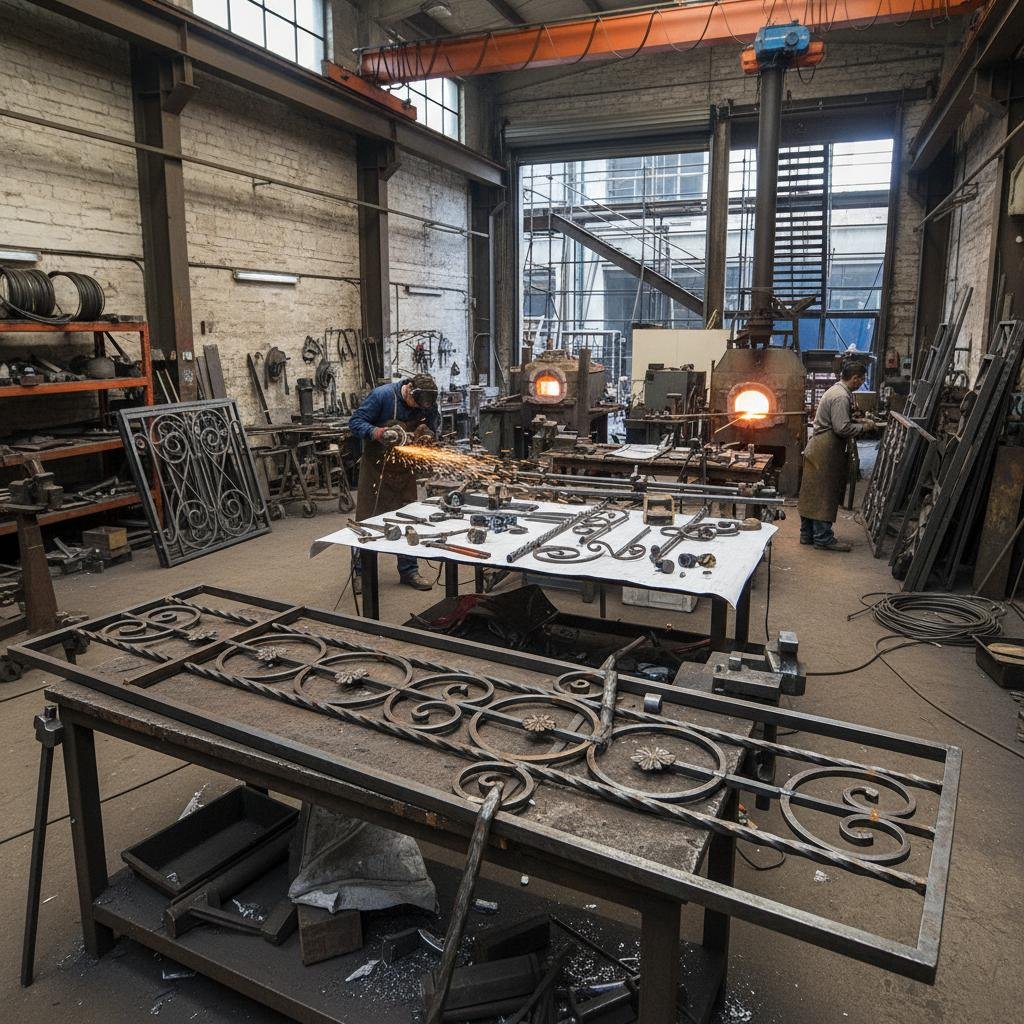
Architectural products are often expected to remain in service for many years.
This makes material selection and surface treatment important.
Ironwork can be exposed to:
· Rain
· Humidity
· Sunlight
· Temperature changes
· Salt air
· Dirt and pollutants
Corrosion is therefore an important consideration, especially for outdoor applications.
Historical preservation guidance from the National Park Service shows that iron can deteriorate through corrosion, particularly when exposed to challenging environments such as moisture and saltwater. Protective coatings and appropriate maintenance are therefore important considerations for ironwork.
For modern architectural ironwork, manufacturers may use processes such as:
Surface preparation → Sandblasting → Primer/protective treatment → Powder coating or other finish
The exact treatment should depend on the material, application, environment, and customer's specifications.
Some people associate wrought iron with old European buildings, classical villas, or traditional homes.
But ironwork is not limited to traditional architecture.
Decorative scrolls, floral patterns, twisted elements, and elaborate details can complement classical architecture.
Simple lines, minimal decoration, square or rectangular profiles, and clean geometric patterns can fit contemporary buildings.
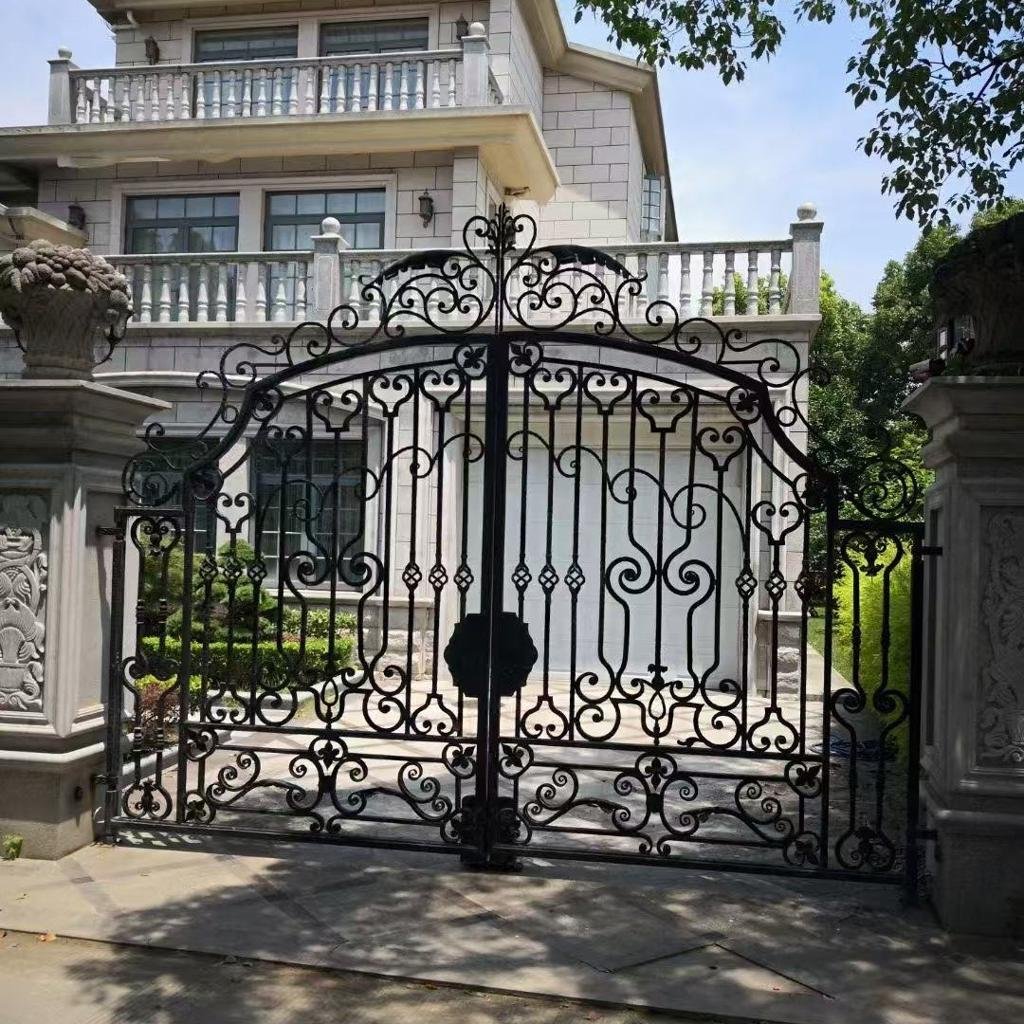
The key is design rather than simply the material itself.
The same basic material can look completely different depending on its shape, proportions, surface finish, and surrounding architecture.
The entrance is often one of the first things people notice about a property.
A plain entrance may simply provide access.
A well-designed iron gate can become an architectural feature.
The same applies to balconies, staircases, fences, and entrance railings.
For hotels, villas, restaurants, commercial buildings, and high-end residential projects, these details can contribute to the overall visual identity of the property.
9. Wrought Iron Has a Timeless Quality
Architectural trends change.
Colors change.
Building materials change.
But decorative ironwork has remained part of architectural design for generations.
Historic ironwork can still be found in buildings and sites that are preserved today. The continued preservation of historic iron elements demonstrates that architectural metalwork can have value beyond its original practical purpose.
This gives ironwork a particular advantage:
It can be designed for today's project without necessarily looking outdated in the future.
A good design should not depend entirely on a short-term trend.
Although wrought iron offers many advantages, there is no single ironwork specification that is suitable for every project.
Before ordering, buyers should consider:
Is the product for an indoor or outdoor project?
Will it be exposed to rain, humidity, coastal air, or other corrosive conditions?
Does the project require decorative patterns or a minimalist appearance?
What are the required length, width, height, thickness, and tolerances?
Should the product be painted, powder coated, galvanized, or treated according to another specification?
Is it a one-off custom project or a large production order?
Does the manufacturer need to consider mounting holes, brackets, connections, or installation conditions?
Providing these details early can help a manufacturer give a more accurate quotation and production proposal.
The popularity of wrought iron in architectural design comes from the combination of several characteristics:
✔ Customizable designs
✔ Decorative possibilities
✔ Functional performance
✔ Compatibility with different materials
✔ Long-term architectural appeal
✔ Wide range of applications
✔ Suitable for both traditional and modern designs
Most importantly, ironwork gives architects and designers something that many standard building products cannot easily provide:
The ability to turn a functional metal component into an architectural feature.
From a simple gate to a complex staircase, from a decorative balcony to a custom entrance, well-designed ironwork can contribute to both the function and character of a building.
Wrought iron remains popular in architectural design because it offers more than strength or decoration alone.
It provides a flexible way to combine function, craftsmanship, customization, and visual identity.
For architects, designers, builders, and property owners, the most important question is not simply “Is wrought iron good?”
A better question is:
“What type of ironwork, material, design, and surface treatment is right for this project?”
With the right specifications and manufacturing process, custom ironwork can become a long-lasting part of an architectural project rather than just another building component.