
- home
- About us
- product
- news
- download
- contact us

2026/10/12
Wrought iron scrolls and decorative elements help metal fabricators create distinctive gates, fences, railings, and architectural metalwork. The right combination of scrolls, spearheads, decorative leaves, and stamped metal parts can transform a simple metal frame into a more detailed and visually balanced design.
For importers, wholesalers, and ornamental iron manufacturers, choosing the right components involves more than appearance. Dimensions, material thickness, component compatibility, surface finish, and order quantity all affect the final result.
This guide explains the main types of wrought iron scrolls and decorative elements, where they are used, how to select compatible components, and what to consider when developing custom designs.
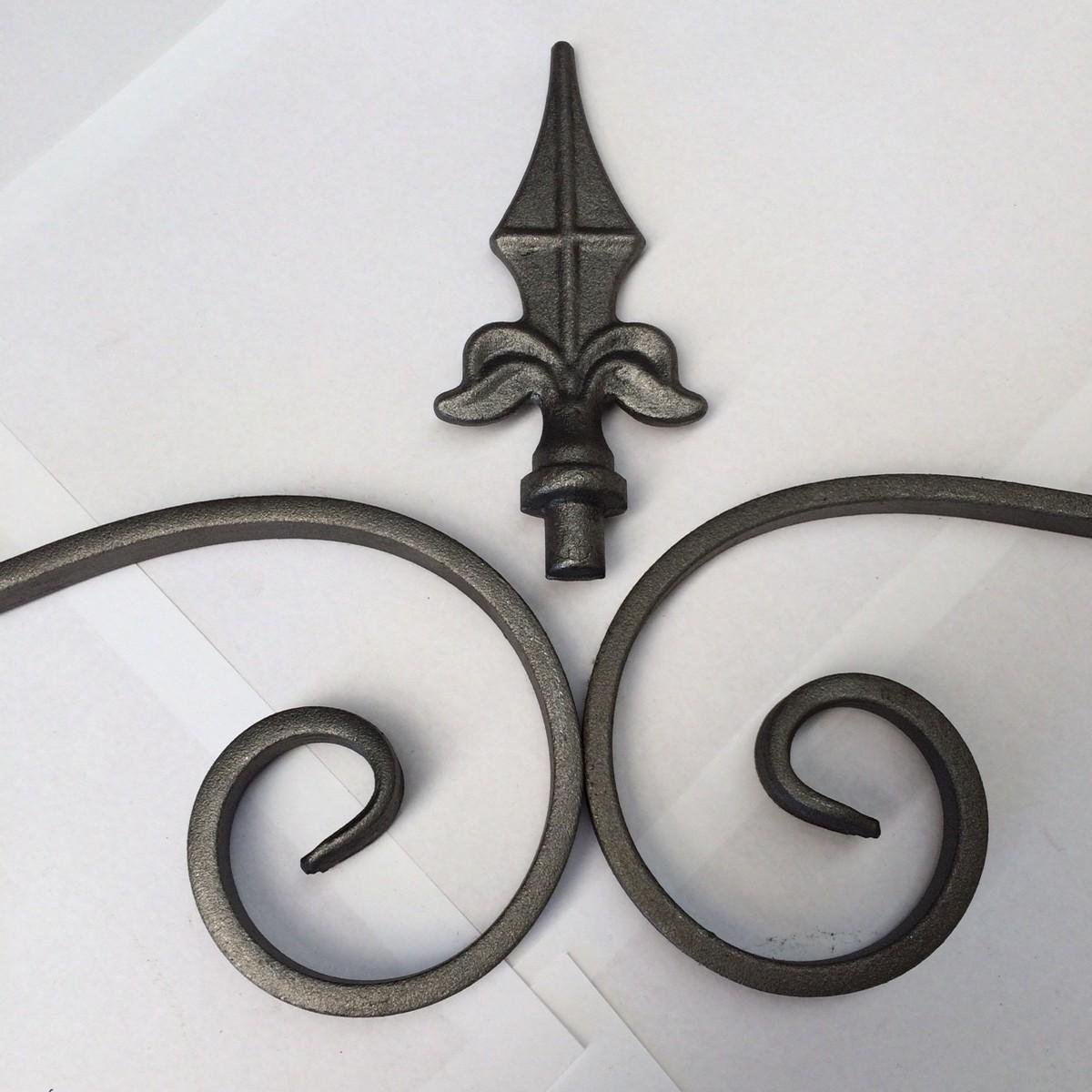
Wrought iron scrolls are curved metal components used to create flowing patterns in ornamental metalwork. They are commonly made from formed steel bars or flat steel sections and can be combined with other decorative parts to create different styles.
Decorative elements include a wider range of metal components, such as spearheads, leaves, flowers, rings, rosettes, collars, and stamped metal ornaments.
These components allow manufacturers to create different designs without producing every decorative detail from raw material.
For example, a gate manufacturer might combine straight steel bars, S-shaped scrolls, spearheads, and stamped leaves to create a traditional ornamental gate. A simpler design might use a few C-shaped scrolls with clean lines and minimal decoration.
The best combination depends on the intended application, the overall design, and the specifications of the finished metalwork.
[Image 1: Insert after this section]
Image suggestion: A product display featuring several wrought iron scrolls, spearheads, decorative leaves, and stamped metal ornaments arranged on a neutral industrial background.
Alt text: Wrought iron scrolls, spearheads, and decorative metal components for ornamental ironwork
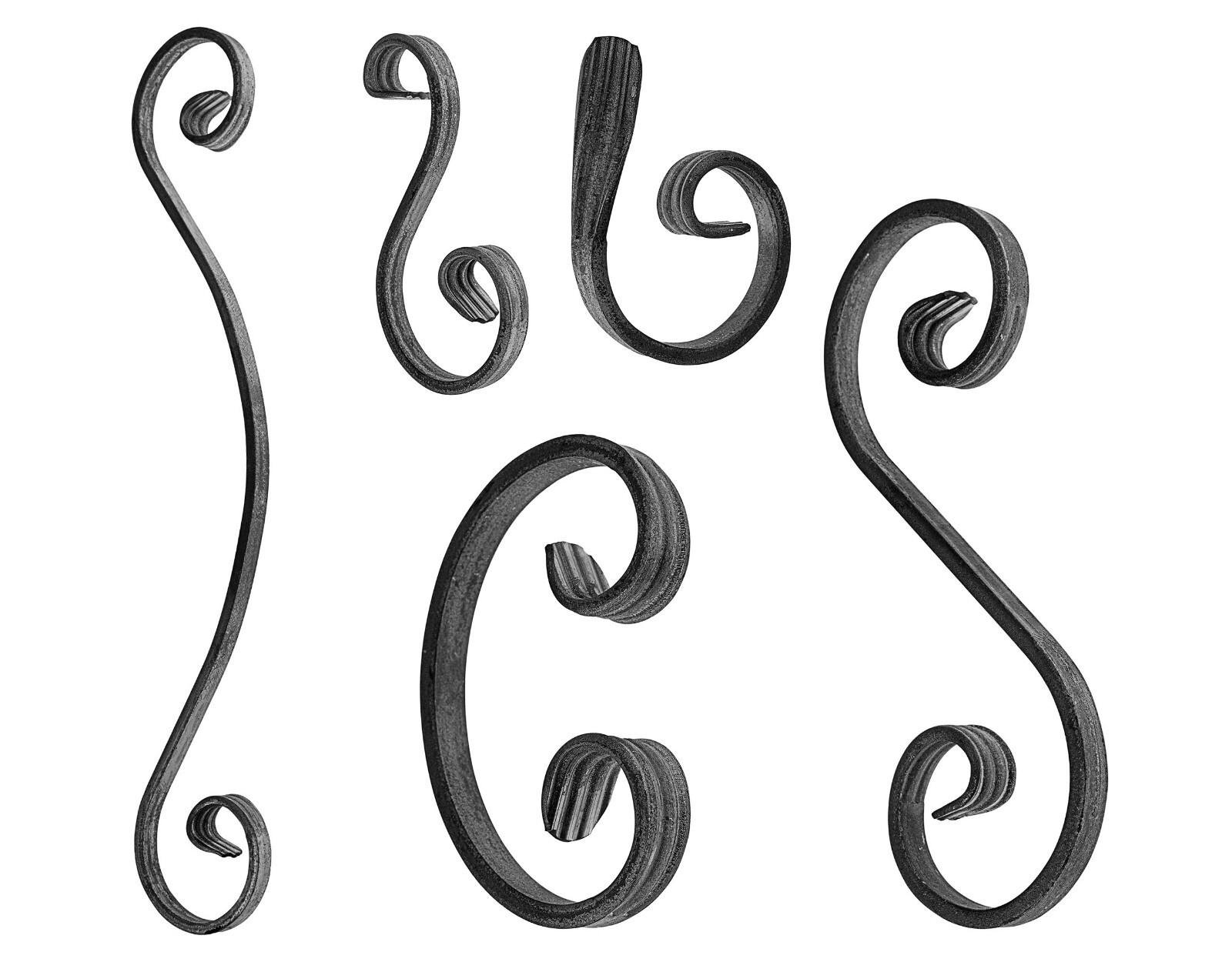
Different scroll shapes create different visual effects. Understanding their characteristics helps buyers choose components that fit their products and customers' design preferences.
C-shaped scrolls feature a single curved line. They are suitable for relatively simple decorative patterns and can be used individually or in repeated arrangements.
Common applications include:
Decorative gate panels
Fence sections
Stair railings
Balcony railings
Custom ornamental metalwork
C-scrolls work well when a design needs a decorative curve without excessive detail.
S-shaped scrolls feature two opposing curves that create a flowing pattern. They are frequently used in symmetrical layouts and traditional ornamental designs.
They can be installed in pairs or combined with straight bars and other decorative elements.
For fabricators, orientation is important. Before ordering, confirm whether the design requires left-hand scrolls, right-hand scrolls, or matching pairs.
Double scrolls combine two curved sections into a larger decorative pattern. Depending on their shape and arrangement, they can create a balanced focal point in the center of a gate or railing panel.
These components are useful when a project requires a more elaborate appearance without making the entire structure excessively decorative.
Standard scroll patterns are suitable for many common applications, but some projects require specific dimensions, curve shapes, or material sections.
Custom wrought iron scrolls can be developed from drawings, physical samples, or reference images, subject to manufacturing feasibility.
When requesting a custom quotation, provide the overall width and height, material profile, thickness or bar size, and any important connection dimensions. This information helps the manufacturer assess the design more accurately.
[Image 2: Insert after this section]
Image suggestion: Three product photographs showing C-shaped scrolls, S-shaped scrolls, and symmetrical double scrolls, each clearly separated.
Alt text: C-shaped, S-shaped, and double wrought iron scroll designs for gates and railings
Scrolls are only one part of a decorative metalwork design. Combining them with compatible components creates more variety and helps manufacturers develop product lines for different customer preferences.
Spearheads are commonly installed at the tops of vertical bars in gates and fences. They can give a structure a traditional appearance while forming part of its overall design.
When combining spearheads with scrolls, consider the visual weight of each component. Large, ornate spearheads may overpower delicate scrollwork, while smaller spearheads can complement simpler patterns.
For buyers, it is also important to confirm the spearhead's base dimensions and attachment method before placing a bulk order.
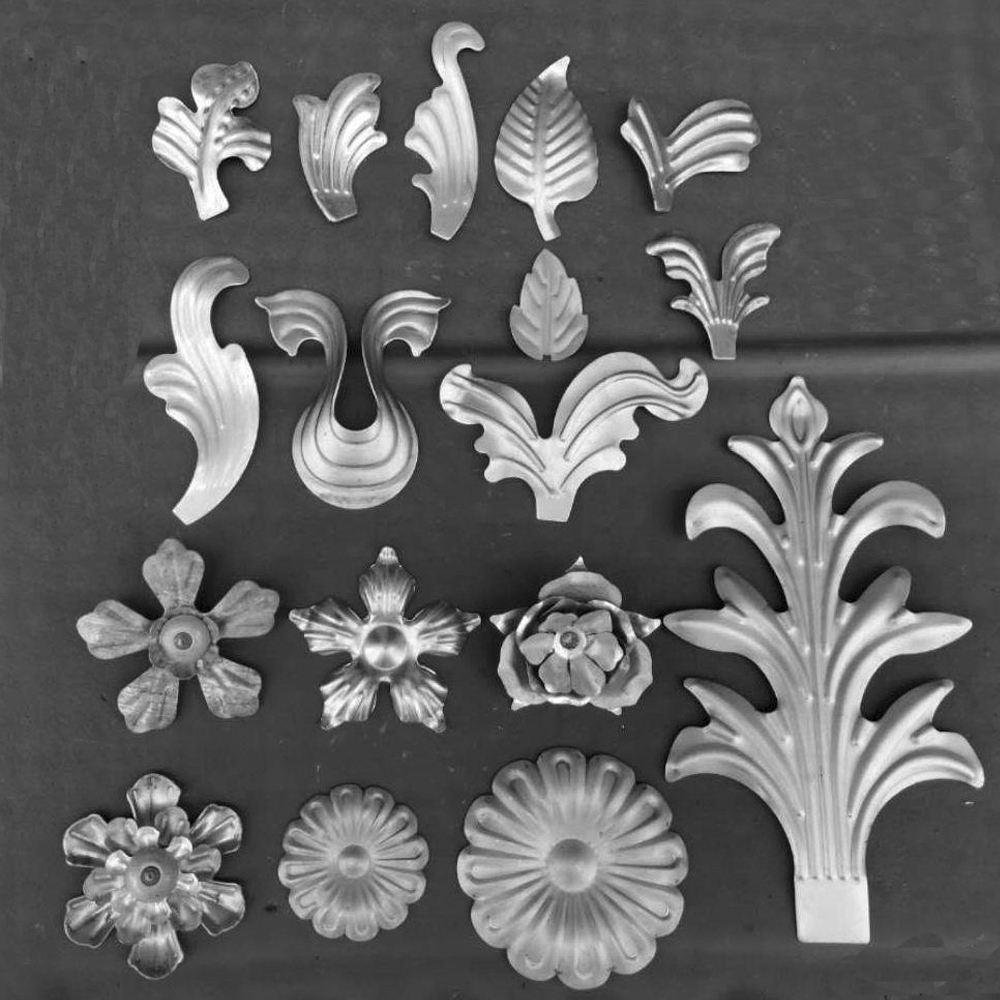
Leaves and flowers introduce natural shapes into metalwork. They are often used with scrolls to create traditional, garden-inspired, or European-style designs.
Stamped metal leaves can be useful for repeat production because their shapes can be produced consistently. Their suitability depends on the required material, thickness, design complexity, and production method.
These components can be used on gates, railing panels, decorative screens, and selected metal furniture designs.
Rings and rosettes provide additional visual detail and can help break up large areas of straight bars.
Decorative plates and stamped ornaments are particularly useful when a design calls for repeated patterns or a defined central feature.
When sourcing these parts, check the outside dimensions, material thickness, hole locations where applicable, and whether the components will be welded, mechanically attached, or incorporated into another assembly.
Collars and similar components can add detail where bars intersect or where decorative sections meet the main structure.
Their appearance matters, but their dimensions and compatibility with adjoining bars are equally important. A component that looks correct in a photograph may not fit the intended bar size.
[Image 3: Insert after this section]
Image suggestion: A close-up product collection of spearheads, stamped leaves, flowers, rings, rosettes, and collars.
Alt text: Decorative iron spearheads, stamped leaves, rosettes, rings, and collars for metal fabrication
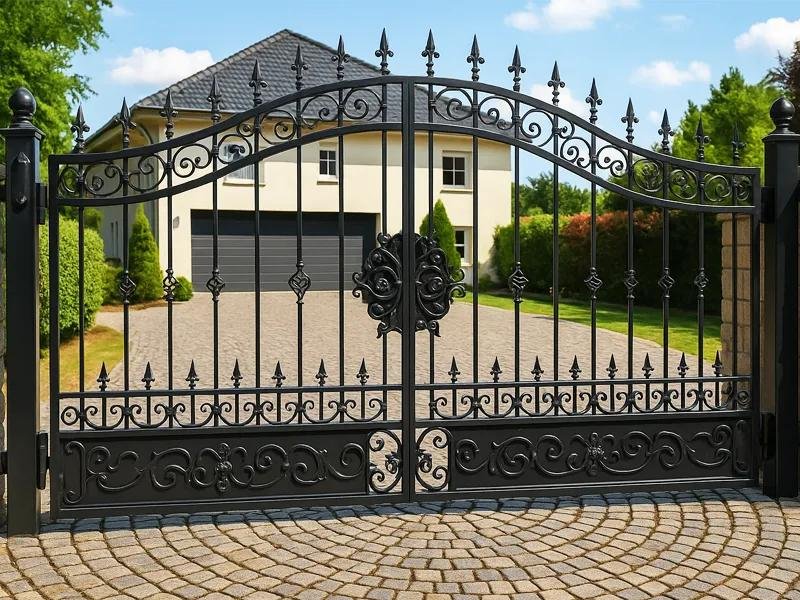
Although gates and fences are major applications, decorative iron components are not limited to outdoor boundary products. Their versatility makes them suitable for a wider range of fabricated metalwork.
Decorative scrolls can soften the straight lines of a gate frame, while spearheads and other ornaments add detail to the upper sections.
For fence manufacturers, repeated component patterns can help maintain a consistent appearance across multiple panels.
When planning production, confirm the component spacing, overall panel dimensions, and attachment positions before ordering in bulk.
Scrolls and decorative inserts can be incorporated into railing panels to create traditional or more elaborate designs.
For these applications, pay particular attention to the available infill space, component orientation, and the relationship between the decoration and the supporting bars.
The complete railing must also meet the structural and safety requirements applicable to its installation.
Decorative metal elements can be used in partitions, window grilles, entrance features, and other architectural metalwork.
In these applications, the design may require a particular pattern, repeat spacing, or visual effect that differs from standard gate components.
Custom-developed parts can help manufacturers achieve a consistent appearance across a project.
Selected scrolls and decorative components can also be used in benches, tables, garden ornaments, and other metal products.
For these applications, component size and appearance should match the overall product design. The attachment method and surface finish should also be appropriate for the intended use.
[Image 4: Insert after this section]
Image suggestion: A real-world example of decorative scrollwork installed in a metal gate, railing, or architectural screen.
Alt text: Wrought iron scrollwork used in a decorative metal gate and railing design
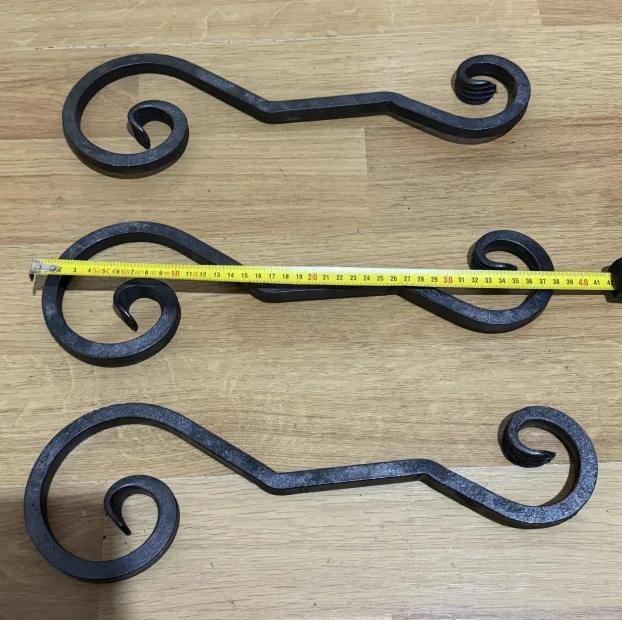
A suitable component should match both the design requirements and the manufacturing process. Before selecting a product, consider the following factors.
Confirm the overall width, height, material profile, and thickness or bar size.
These details are particularly important when replacing an existing component or combining parts from different suppliers.
Do not rely on product photographs alone. Two scrolls may look similar but have different dimensions and connection points.
Consider the size of the finished gate, railing, or panel before selecting decorative elements.
For example, a large gate may accommodate a more substantial scroll pattern, while a small pedestrian gate may look better with fewer decorative details.
The goal is to create a balanced design rather than simply adding as many ornaments as possible.
The appropriate material depends on the intended application, component design, production process, and required properties.
Decorative parts may be formed, forged, stamped, cast, or produced using other suitable processes. These methods are not interchangeable in every situation.
For custom projects, discuss the intended material and manufacturing method with the supplier before confirming the design.
Surface treatment affects appearance, maintenance, and resistance to corrosion.
Depending on the product and its intended use, available options may include:
Uncoated or cleaned metal for further processing
Primer or paint systems
Powder coating
Galvanizing where suitable for the component and application
For outdoor products, the treatment should be selected according to the exposure conditions and the requirements of the finished assembly.
Confirm whether the quotation covers unfinished components or finished products, as this can affect the final cost and processing requirements.
Standard components may be suitable for regular replenishment, while custom designs may require additional development and production preparation.
If you plan to order the same design repeatedly, confirm the drawing revision, material specifications, dimensional tolerances, and quality requirements before mass production.
[Image 5: Insert after this section]
Image suggestion: A close-up comparison of two similar scrolls showing their different widths, bar sections, and overall dimensions.
Alt text: Wrought iron scroll dimensions and steel bar sizes for custom component selection
Choosing individual components is only the first step. They must also work together as a complete design.
Here are three practical combinations for different product styles.
A traditional gate might combine:
S-shaped scrolls
Decorative spearheads
Stamped leaves
Plain vertical bars
The scrolls create the main decorative pattern, while the spearheads provide a consistent finish along the top.
A simpler fence design might use:
Straight vertical bars
Small C-shaped scrolls
Matching spearheads
Minimal decorative connectors
This approach adds detail without making the fence look overly ornate.
A custom panel might combine:
Specially shaped scrolls
Stamped metal ornaments
Decorative rings or plates
Custom-sized connecting parts
This combination is suitable when a standard catalog design does not meet the project's requirements.
For all three designs, it is worth checking the complete layout before ordering. A simple drawing showing component positions and dimensions can help identify potential fit issues early.
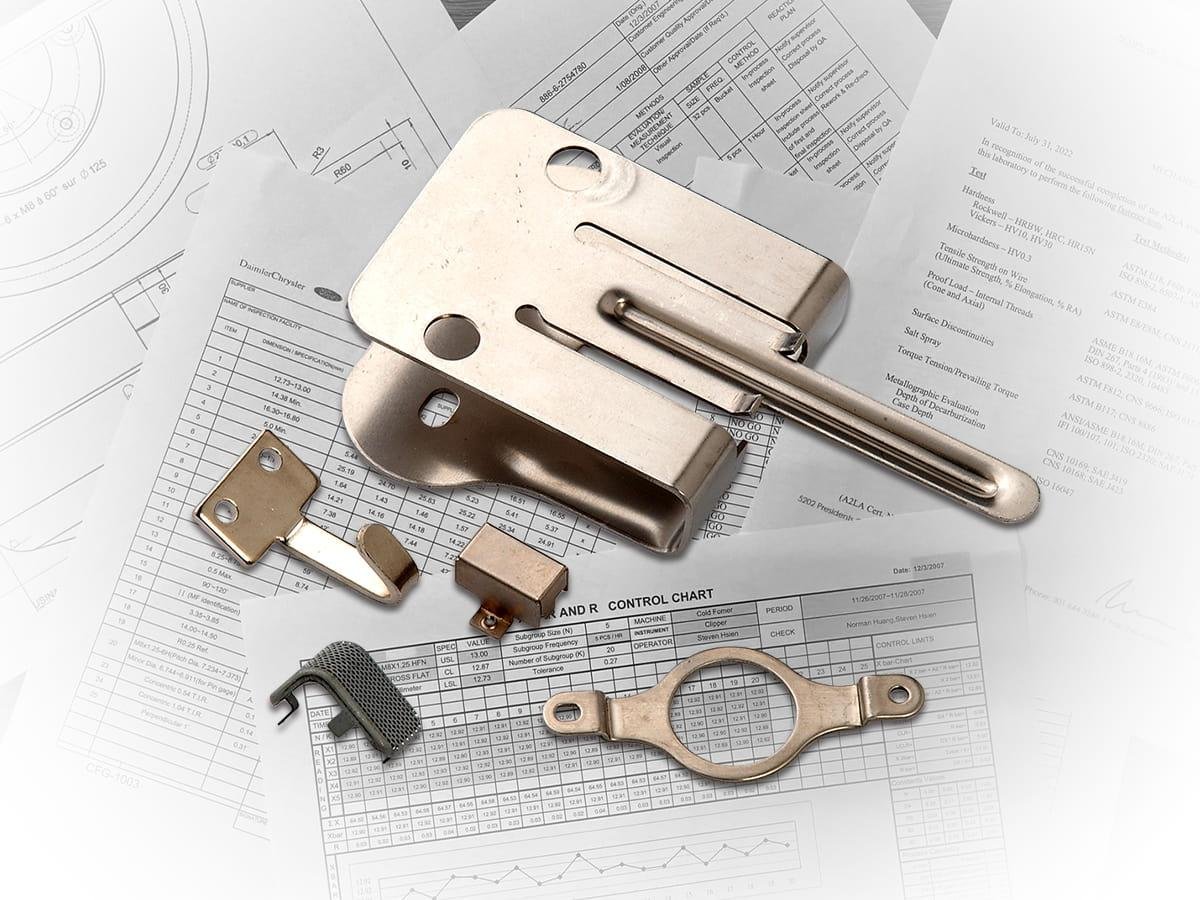
Standard components can meet many requirements, but custom development may be necessary when a project has a distinctive design or specific dimensional requirements.
For manufacturers, importers, and wholesalers, a clear technical brief makes the quotation and evaluation process more efficient.
When requesting custom wrought iron scrolls or decorative metal parts, try to provide:
Drawing or reference image: A CAD drawing, PDF, photograph, or physical sample.
Dimensions: Overall width, height, thickness, bar size, and critical connection dimensions.
Material requirements: Specify the material if known, or describe the intended application so the supplier can recommend an appropriate option.
Surface treatment: Indicate whether you need unfinished components, primer, paint, powder coating, galvanizing, or another specified finish.
Order quantity: Include the estimated sample quantity, initial order quantity, and expected repeat demand if available.
Application: Explain whether the component will be used for a gate, fence, railing, furniture item, or another product.
Quality requirements: Identify any critical dimensions, tolerances, appearance standards, or inspection requirements.
You do not need to have every detail finalized before making an inquiry. A clear reference image and approximate dimensions can be a useful starting point for an initial feasibility review.
Yes, depending on the design and manufacturing requirements.
A supplier may evaluate a physical sample, reproduce its relevant dimensions, and determine a suitable production process. However, a photograph alone may not reveal material thickness, hidden connection details, or other critical specifications.
For this reason, physical samples or technical drawings are preferable when dimensional accuracy is important.
Before mass production, review the sample against the agreed specifications. Confirm the dimensions, material, surface condition, and any critical fit requirements.
A sample gives buyers an opportunity to assess whether the component meets their requirements before committing to a larger order.
During evaluation, check:
Whether the dimensions match the drawing
Whether the component fits the intended bars or assembly
Whether the shape and decorative details are consistent
Whether the surface condition is acceptable
Whether the attachment method suits the finished product
Any changes should be agreed upon before mass production so that the final product follows the approved specification.
[Image 6: Insert after this section]
Image suggestion: A custom metal component beside its technical drawing, with a sample inspection taking place on a workbench.
Alt text: Custom wrought iron scroll sample and technical drawing for dimensional inspection
For B2B buyers, a supplier's value extends beyond the unit price. Product development capability, communication, production consistency, and export experience can all influence the purchasing decision.
Qingdao Benxiang is an integrated manufacturing and trading company with approximately 20 years of export experience in European and North American markets.
Our product range includes wrought iron scrolls, decorative iron components, spearheads, and metal stamping parts. With our own design team, we can evaluate custom requirements based on customer drawings, physical samples, or design ideas.
For buyers who need more than standard catalog items, this can provide a starting point for discussing component dimensions, material selection, manufacturing feasibility, and sample development.
When evaluating a potential supplier, buyers should also confirm the applicable minimum order quantity, tooling requirements where relevant, production lead time, inspection arrangements, packaging, and shipping terms.
These details help both parties establish clear expectations before an order is placed.
Wrought iron scrolls are a specific type of curved decorative component. Decorative iron elements is a broader term that includes scrolls, spearheads, leaves, flowers, rings, rosettes, collars, and other ornamental parts.
Yes. Depending on manufacturing feasibility, scrolls can be developed to meet specific dimensions, shapes, material profiles, and design requirements. Buyers can provide drawings, samples, or reference images for evaluation.
The most useful information includes a drawing or reference image, dimensions, material requirements, surface finish, estimated order quantity, and intended application. If some details are not available, an initial inquiry can still be used to discuss feasibility.
They can be suitable for outdoor applications when the material and protective finish are appropriate for the intended environment. The finished assembly's exposure conditions, maintenance needs, and applicable requirements should be considered when selecting a finish.
Yes. Scrolls and spearheads are often used together in ornamental gates and fences. Their size, style, spacing, and attachment details should be coordinated to create a balanced design.
Sample evaluation is advisable for new or customized components, especially when dimensions, appearance, or assembly compatibility are critical. Agree on the inspection criteria before approving mass production.
Wrought iron scrolls and decorative elements offer metal fabricators and product manufacturers many ways to develop distinctive designs. The right combination depends on the application, component dimensions, material, surface treatment, and manufacturing requirements.
For standard products, clear specifications help buyers select compatible components. For custom projects, drawings, samples, and early technical discussions can reduce misunderstandings before production begins.
If you are sourcing wrought iron scrolls, spearheads, decorative iron components, or custom metal stamping parts, Qingdao Benxiang can review your drawings, samples, or design ideas and discuss suitable manufacturing options.
Contact our team to discuss your component requirements. Share your reference images, dimensions, estimated quantity, and target application to help us evaluate your project and prepare a quotation.