
- home
- About us
- product
- news
- download
- contact us

2026/09/16
At first glance, a wrought iron fence and an aluminum fence can look almost identical.
Both can be black.
Both can have decorative details.
Both can be used around homes, gardens, entrances, and commercial properties.
So why choose one over the other?
The answer isn't simply “wrought iron is better” or “aluminum is better.”
It depends on what you care about most: strength, weight, maintenance, design, durability, cost, or customization.
If you're planning a new fence or gate, here's what you should know before making your decision.
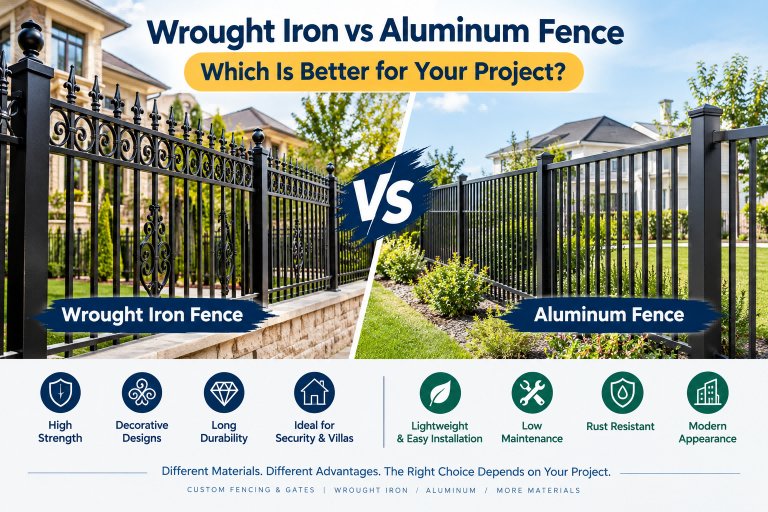
The biggest difference is simple:
Wrought iron is heavy and strong. Aluminum is lightweight and easier to handle.
That difference affects almost everything else.
A wrought iron fence has a solid, substantial feel. It is often selected for security fences, decorative gates, villa projects, and applications where strength matters.
Aluminum fencing is much lighter. It can be easier to transport, handle, and install, making it attractive for projects where reducing weight is important.
But weight isn't the only factor.
The way the fence is designed, welded, finished, and installed can have a major impact on the final result.
If your first question is “Which one is stronger?”, wrought iron generally has the advantage.
Wrought iron is a heavy-duty material that can provide a strong and rigid fence structure.
This makes it particularly suitable for:
Security fencing
Large entrance gates
Villa gates
Commercial properties
Heavy decorative structures
Projects where a substantial appearance is desired
Aluminum is lighter and generally less resistant to heavy physical impact than wrought iron.
That doesn't mean aluminum is weak.
It simply means the two materials are often chosen for different priorities.
If strength is one of your main requirements, wrought iron is worth considering first.

Here's where aluminum has a clear practical advantage.
A large wrought iron gate or fence panel can be surprisingly heavy.
That means transportation, carrying, positioning, and installation may require more manpower or equipment.
Aluminum is much lighter.
For some projects, this can make installation faster and easier.
This is especially useful when:
The installation area is difficult to access
Transportation distance is long
Labor costs are high
Large numbers of fence panels are required
The project needs lightweight components
So if you're looking at the project from an installation and transportation perspective, aluminum deserves serious consideration.

This is one of the most common questions customers ask.
Wrought iron is an iron-based material, so corrosion protection is an important part of outdoor applications.
But don't judge a wrought iron fence only by its material.
Surface preparation and finishing matter.
A properly prepared and coated wrought iron fence can provide good outdoor durability.
Aluminum, on the other hand, naturally forms a protective oxide layer and does not rust like iron.
For outdoor projects exposed to moisture, choosing the right material and finish is therefore important.
In other words:
Material matters—but the finishing process matters too.
If your priority is minimizing maintenance, aluminum can be attractive.
Its resistance to rust means you generally don't have to deal with the same type of corrosion issues associated with untreated iron.
Wrought iron can also be a long-lasting outdoor solution when it receives appropriate corrosion protection and periodic maintenance.
For a wrought iron fence, factors such as:
Surface preparation
Primer
Powder coating or other protective coating
Installation environment
Regular inspection
can all affect long-term performance.
A good factory should therefore be able to explain not only what material is being used, but also how the surface is treated.
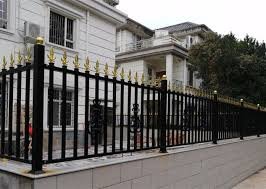
This one is more subjective.
A well-made aluminum fence can look clean, modern, and elegant.
But wrought iron has a unique visual character.
Its heavier structure can create a more substantial appearance, especially when combined with decorative elements such as:
Scrolls
Spear tops
Curved details
Ornamental patterns
Decorative posts
Custom gate designs
This is one reason wrought iron remains popular for entrance gates and decorative fencing.
And here's something many buyers overlook:
The material alone doesn't determine whether a fence looks expensive.
Tube size, spacing, welding quality, proportions, surface finish, and decorative details can completely change the appearance.
Two fences can both be black—and still look completely different.
Both materials can be customized.
But they are often used differently.
Wrought iron is particularly suitable for decorative and highly customized designs.
For example, a customer may request:
“We want a simple black fence, but with a custom pattern in the center.”
Or:
“Can you make the gate match our existing architectural style?”
These projects require more than simply selecting a standard fence panel.
They require fabrication and customization capability.
Aluminum can also be produced in many different styles, particularly for clean and modern fence designs.
So instead of asking:
“Which material has more designs?”
A better question is:
“Which material and manufacturing process can achieve the design I need?”
This is where things get interesting.
Many buyers compare only the material price.
That's not enough.
The actual project cost can include:
Material + fabrication + finishing + packaging + shipping + installation + maintenance
A lightweight aluminum fence may have advantages in transportation and installation.
A wrought iron fence may offer advantages where strength and heavy-duty construction are more important.
The final cost can also change significantly depending on:
Fence size
Material thickness
Design complexity
Quantity
Surface treatment
Packaging
Shipping distance
Custom tooling or fabrication requirements
So when comparing two quotations, make sure you're comparing the same specifications, not just two numbers.
There is no universal answer.
You may want to consider wrought iron if your project focuses on:
✔ Strength
✔ Security
✔ Heavy-duty construction
✔ Decorative designs
✔ Custom gates
✔ A substantial, traditional appearance
For example, a large villa entrance gate may benefit from the weight and visual presence of wrought iron.
Aluminum may be a better fit when your priorities include:
✔ Lightweight construction
✔ Easy handling
✔ Easy installation
✔ Low maintenance
✔ Corrosion resistance
✔ Modern designs
For projects where transportation and installation are important considerations, the lighter weight can be a significant advantage.
Here's something more important than many buyers realize:
A good material can still produce a poor fence.
Imagine two factories using the same material.
One has:
Accurate cutting
Good welding
Proper surface preparation
Consistent dimensions
Careful finishing
Good packaging
The other doesn't.
The finished fences may look completely different.
That's why, when you're sourcing fencing from a manufacturer, don't ask only:
“Is it wrought iron or aluminum?”
Also ask:
“How is it made?”
For custom projects, manufacturing capability can make a major difference.
Instead of looking for one universal winner, start with your project requirements.
If strength, security, heavy construction, and decorative customization are your priorities, wrought iron may be worth considering.
If lightweight construction, easy installation, and low maintenance are more important, aluminum may be a better match.
And if you're still unsure, ask a manufacturer to compare both materials based on your actual project.
Give them the:
Fence dimensions
Design
Quantity
Installation location
Surface finish
Performance requirements
A manufacturer with experience in both materials can help you understand the practical differences before you place an order.
For some projects, the best solution may not be about choosing a material from a catalog.
It may be about choosing the right material for the right component.
A factory that can work with wrought iron, aluminum, and other materials can evaluate the project from a manufacturing perspective and suggest different options.
That's especially useful for custom gates and fencing projects where design, strength, weight, cost, and installation all need to be considered together.
The right fence isn't simply the one made from the “better” material.
It's the one that matches your project.