
- home
- About us
- product
- news
- download
- contact us

2026/09/18
Walk past a beautiful wrought iron gate, decorative panel, or iron scroll, and you may notice something interesting.
It doesn’t always look perfectly “machine-made.”
The curves have character.
The details feel slightly alive.
And even when two pieces follow the same design, they can have a visual quality that feels closer to craftsmanship than mass production.
But here’s the surprising part:
A modern wrought iron factory can use machines for much of the production.
So why does the finished product still have a handmade feel?
The answer is not simply “because someone made it by hand.”
It’s because machines and people do different jobs.
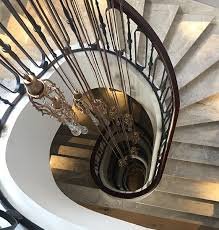
Modern metalworking equipment has changed the way wrought iron products are manufactured.
Machines can help with:
Cutting
Bending
Forming
Punching
Stamping
Drilling
Repetitive production
Dimensional control
For a factory producing hundreds or thousands of decorative iron components, this consistency is extremely important.
Imagine ordering 500 decorative iron scrolls.
You probably don’t want the first 50 pieces to look completely different from the last 50.
That is where machinery becomes valuable.
Machines repeat the process.
They can follow the same dimensions, the same forming method, and the same production requirements over and over again.
But consistency alone doesn't create the character people associate with wrought iron.
That part comes from somewhere else.
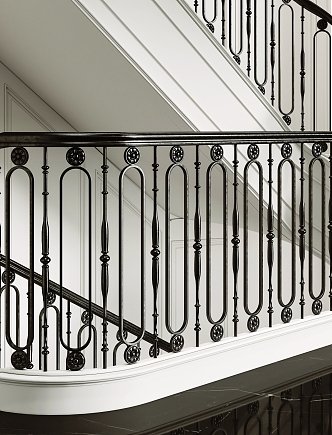
Look closely at a wrought iron product.
The overall design may be simple, but the final appearance can depend on dozens of small details.
For example:
How smoothly a curve transitions
How two pieces meet
How much visual weight a decorative element has
How clean the weld looks
Whether the surface is properly prepared
How the final coating changes the appearance
These details may not be obvious when you first look at the product.
But together, they change how the entire piece feels.
This is why two products can have almost the same drawing and still look different when finished.
The design is only the beginning.
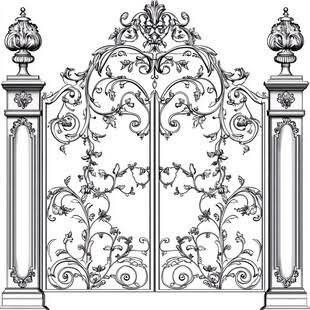
One of the most recognizable features of decorative wrought iron is the curve.
A simple scroll may look easy.
It isn't always.
The radius, direction, proportion, thickness, and transition of the curve all affect the finished appearance.
A machine can perform a repeatable bending operation.
But the production process still needs to be designed correctly.
If the forming process is not suitable for the material or the shape, the result may have:
Uneven curves
Distortion
Surface marks
Inconsistent dimensions
Poor connections between components
This is why tooling and production experience matter.
The goal isn't simply to bend metal.
The goal is to make the metal look intentional.
This is where modern wrought iron manufacturing becomes interesting.
It isn't really a choice between:
Machine OR Handwork
It is often:
Machine + Human Experience
Machines are excellent at repetition.
People are better at judgment.
A machine can make the same bend hundreds of times.
But an experienced worker can notice when something doesn't look right.
Maybe a connection needs adjustment.
Maybe a weld needs cleaning.
Maybe the proportions of a decorative component don't look balanced.
Maybe the surface needs additional preparation before finishing.
These decisions can make a surprisingly large difference to the final product.
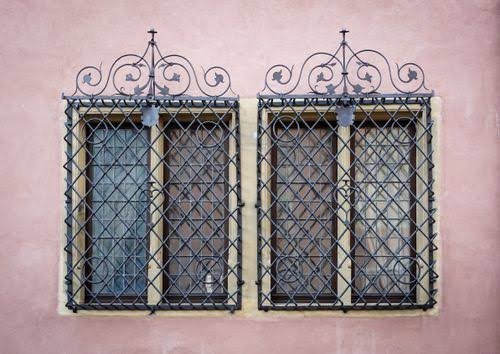
A drawing is flat.
A finished iron product is not.
Once metal is cut, bent, formed, welded, assembled, and finished, the design becomes a three-dimensional object.
That changes everything.
A curve that looks perfect on a computer screen may look too heavy when produced.
A decorative element that looks impressive on paper may become too busy when repeated across a large gate.
And a small change in spacing can completely change the visual rhythm of a design.
This is one reason experienced manufacturers don't simply “follow the drawing.”
They also have to understand how the drawing becomes a real metal product.
Here is another detail that is easy to underestimate:
The surface.
A wrought iron product can have the right design, the right dimensions, and the right shape—and still look different from what you expected.
Why?
Because surface preparation and finishing affect how the metal reflects light.
A smooth surface can create a completely different appearance from a rough one.
Matte, satin, and glossy finishes can also change the visual character of the same design.
Even black isn't simply black.
A deep matte black can feel very different from a glossy black.
So when someone says, “It doesn't look like the sample,” the problem isn't necessarily the design.
It may be the combination of:
shape + surface + coating + light.

Large wrought iron gates get most of the attention.
But some of the most interesting manufacturing challenges are found in small decorative components.
A small scroll, connector, ornament, or stamped detail may look simple.
But producing hundreds of them consistently can require careful control of:
Material
Tooling
Dimensions
Forming
Cutting
Welding
Surface treatment
Inspection
The smaller the component, the less room there may be for visible mistakes.
A tiny difference in shape can become obvious when dozens of identical pieces are installed together.
That's why small doesn't always mean easy.
Not necessarily.
And it doesn't need to be.
Modern manufacturing has a major advantage: repeatability.
Traditional craftsmanship has another advantage: attention to detail.
The best results can come from combining the two.
Machines can handle repetitive production.
Tooling can control shapes and dimensions.
Workers can inspect, adjust, weld, finish, and solve problems during production.
The result is a product that can be manufactured efficiently while still retaining the visual character people expect from wrought iron.
That is perhaps the real reason modern wrought iron can still feel handmade.
The machine makes it repeatable.
The process makes it possible.
And people make the details matter.
If you're sourcing wrought iron products for a project, don't look only at the final photo.
Ask how the product is actually made.
A capable manufacturer should be able to explain:
What material is being used?
How is the material cut?
How are the curves and shapes formed?
Is custom tooling required?
How are components assembled?
How is welding controlled?
How is the surface prepared?
What finishing process is used?
How is consistency checked during production?
These questions can tell you much more about a factory than a beautiful product photograph alone.
Because a good-looking sample is only one piece of the puzzle.
The real question is whether the factory can make that same quality again—and again—and again.
Wrought iron manufacturing doesn't have to choose between traditional craftsmanship and modern production.
The future is likely to use both.
Modern equipment can improve efficiency and consistency.
Experienced workers can control details that machines cannot judge by themselves.
Good tooling can bridge the gap between a design and a repeatable production process.
And careful finishing can turn a basic metal component into something that looks completely different.
So the next time you see a wrought iron gate or decorative iron component that feels “handmade,” take a closer look.
It may not have been made entirely by hand.
It may simply be the result of a modern factory that knows where machines should work—and where human experience still matters.